What parents need to know
Taking notes by hand leads to significantly better learning than typing. The effect more than doubles when students review handwritten notes before exams. Handwriting is slow – forcing students to summarize and reorganize, creating deep cognitive engagement. “Handwriting is thinking.”
Full Citation
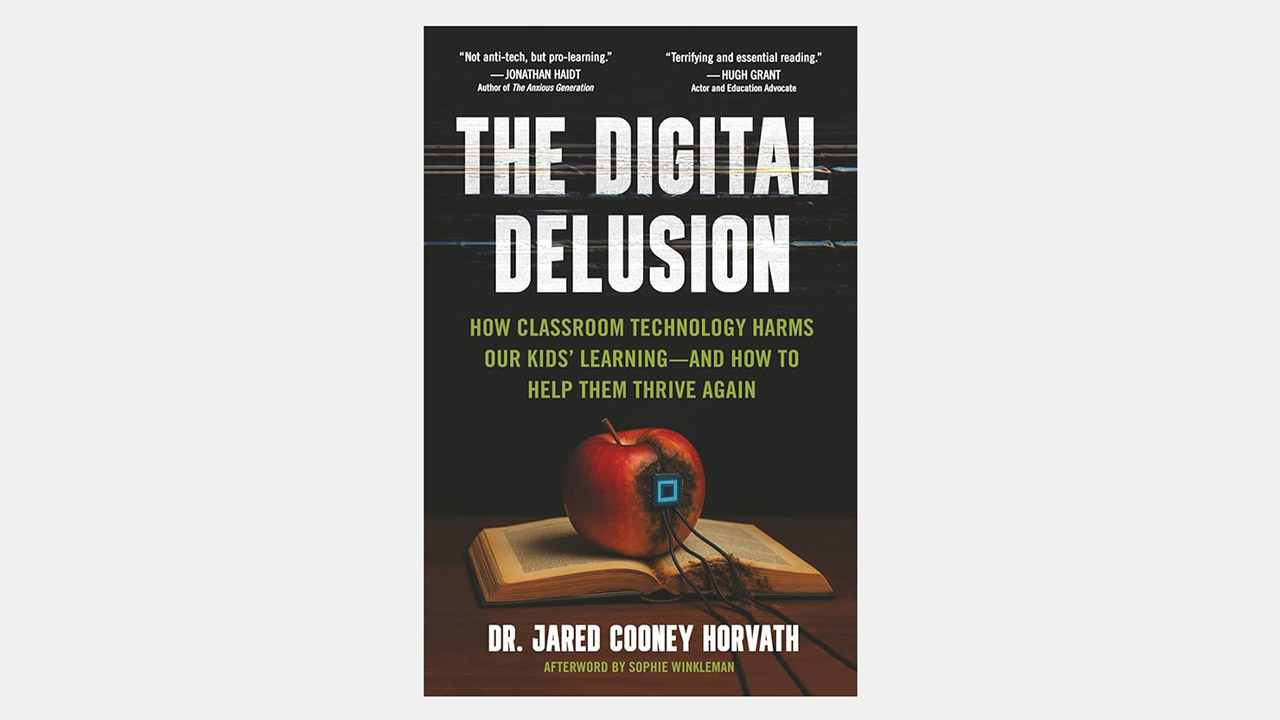
Horvath, J.C. (2025). The Digital Delusion: How Classroom Technology Harms Our Kids’ Learning. Chapter on handwriting and cognition. Penguin Random House.
Publication Type
Book chapter synthesizing neuroscience and educational research on handwriting by neuroscientist and education researcher
What They Studied
Jared Cooney Horvath examined the cognitive and neurological research on why handwriting leads to better learning outcomes than typing. He investigated the mechanisms through which the physical act of writing by hand enhances memory formation, comprehension, and knowledge integration. The analysis draws on neuroscience, cognitive psychology, and educational research to explain the handwriting advantage.
Key Findings
- “Taking notes by hand leads to significantly better learning than typing on a computer”
- “Furthermore, the longhand superiority effect more than doubles when students are allowed to review their handwritten notes before an exam”
- The review effect is crucial: handwritten notes are not just better for initial encoding but particularly powerful for later study
- “Handwriting, on the other hand, is slow. No one can write as quickly as a teacher speaks, which forces pen and paper note takers to focus on meaning”
- This slowness is a feature, not a bug: “They must decide what matters, summarise, reorganise and even reframe material mid-sentence: classic signs of deep cognitive engagement”
- Typing allows verbatim transcription, which paradoxically reduces learning because it requires less cognitive processing
- When students write by hand, they must actively transform the information they’re hearing into their own words and structures
- This transformation process is learning – not just recording for later learning
- “Handwriting is thinking” – the act of writing by hand is itself a form of cognitive processing that enhances understanding
- Students who type are often transcribing without comprehending; students who write by hand are forced to comprehend in order to summarize
Read the book
Horvath, J.C. (2025). The Digital Delusion. Penguin Random House.