What parents need to know
Over two decades of research shows people comprehend and retain more when reading from paper. When we read from paper, each word occupies a fixed physical location – this spatial scaffold supports memory. Digital texts lack this, causing the memory scaffold to collapse and triggering shallow skimming instead of deep comprehension.
Full Citation
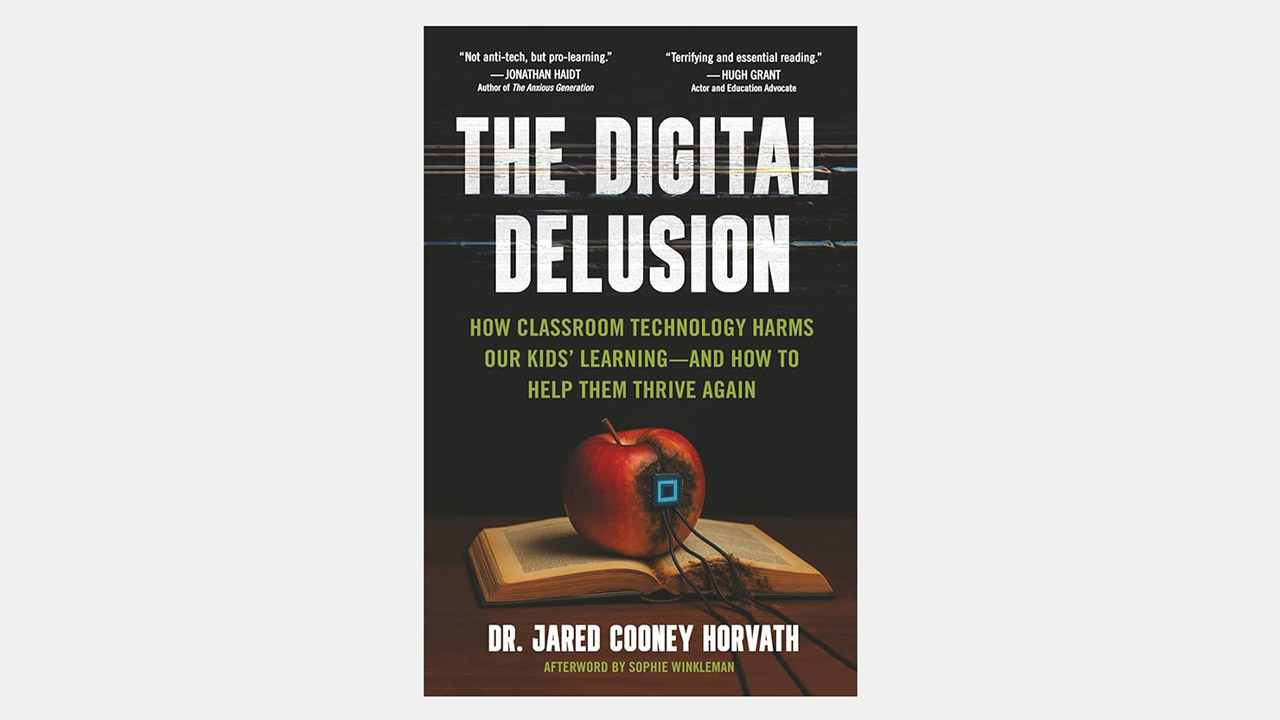
Horvath, J.C. (2025). The Digital Delusion: How Classroom Technology Harms Our Kids’ Learning – And How to Help Them Thrive Again. Chapter on reading comprehension. Penguin Random House.
Publication Type
Book chapter synthesizing two decades of reading comprehension research by neuroscientist and education researcher
What They Studied
Jared Cooney Horvath synthesized over twenty years of research comparing reading comprehension and retention between paper and digital formats. He examined the cognitive and neurological mechanisms that explain why paper reading consistently produces better outcomes, focusing particularly on spatial memory, attention patterns, and the physical properties of different reading mediums.
Key Findings
- “Over two decades of research has shown that people comprehend and retain more when reading from paper than screens”
- “When we read from paper, each word occupies a fixed, physical location” – this creates a spatial map in memory
- “Unfortunately, digital texts lack a fixed spatial layout… With no stable location, the spatial scaffold that supports memory formation collapses”
- “As a result, reading from screens often triggers an unconscious shift from deep comprehension to shallow skimming”
- The spatial stability of paper helps readers form mental maps of where information appears, aiding recall
- Digital scrolling and screen navigation disrupt this spatial mapping process
- The lack of physical permanence on screens encourages surface-level processing rather than deep engagement
- “This helps explain why reading scores on the PISA and PIRLS exams dropped so sharply after these tests moved online”
- The mode effect in testing isn’t just about familiarity with technology – it’s about fundamental differences in how we cognitively process text on different mediums
- The research base is now extensive enough that the paper advantage should be considered established scientific consensus
Read the book
Horvath, J.C. (2025). The Digital Delusion: How Classroom Technology Harms Our Kids’ Learning. Penguin Random House. (Quote from Hugh Grant: “Big Tech’s monetised destruction of our children’s education. Terrifying and essential reading”)