What parents need to know
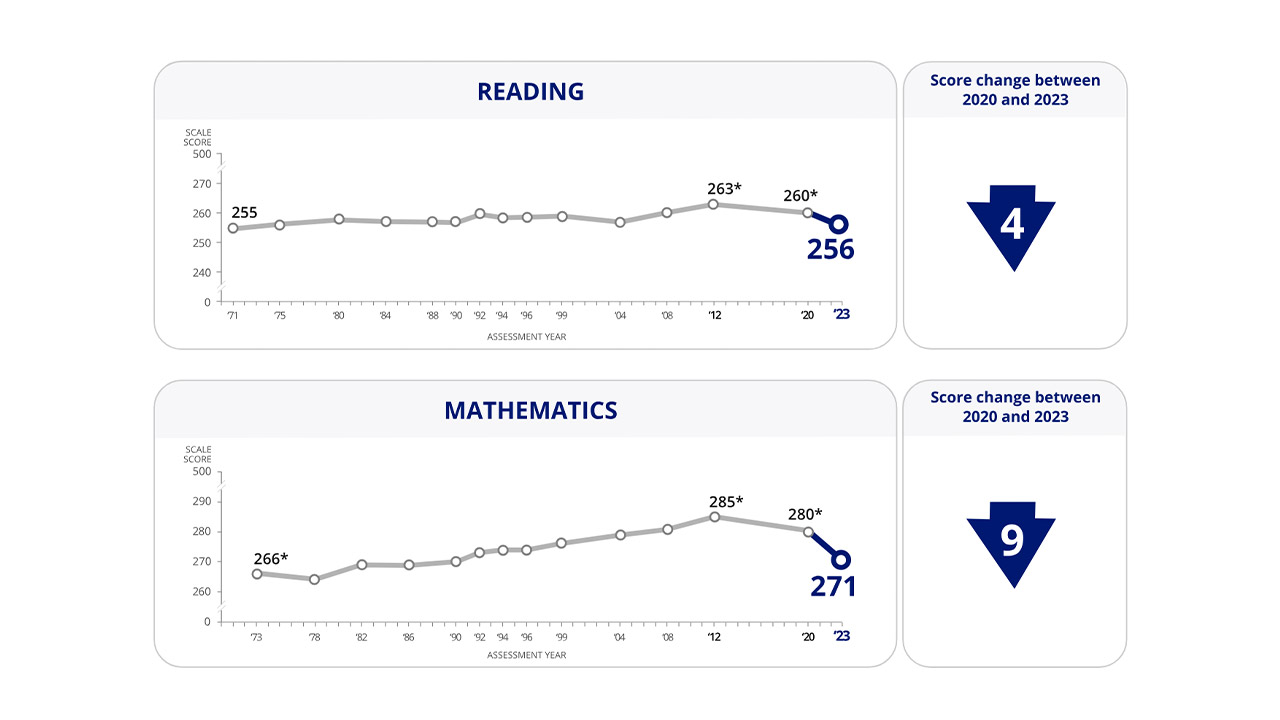
Reading scores have declined at all levels since 2020. America’s long-term reading assessment shows the digital shift is failing children across the board.
Full Citation
National Center for Education Statistics. (2023). NAEP Long-Term Trend Assessment Results: Reading and Mathematics. U.S. Department of Education.
Publication Type
Official government report on national educational assessment data from the National Assessment of Educational Progress (NAEP)
What They Studied
The National Assessment of Educational Progress (NAEP), known as “The Nation’s Report Card,” tracks long-term trends in reading and mathematics performance for American students aged 9, 13, and 17. The assessment has been conducted periodically since the 1970s, providing one of the most comprehensive pictures of how American student achievement has changed over decades. The most recent data examines performance changes through 2023, with particular attention to trends since 2020.
Key Findings
- Long-term trends for reading show that reading scores have declined at all selected percentiles since 2020
- The declines represent the largest drops in reading performance in the history of the assessment
- All age groups (9, 13, and 17-year-olds) showed declining performance
- The declines occurred across all performance levels – not just struggling students but also high-achieving students saw score drops
- While COVID-19 school closures contributed to these declines, the shift to digital learning during and after the pandemic likely played a significant role
- The timing coincides with the most intensive period of device-based learning in American schools
- These national trends mirror the international patterns observed in other countries that have increased classroom technology use
- The data suggests that America’s accelerated adoption of digital learning tools has not produced the promised benefits and may have contributed to declining literacy