What parents need to know
Skills developed offline are more robust, varied, and embodied. Students who learn online often become stuck – unable to export their learning into the real world. When foundation skills are learned digitally, real-world application fails.
Full Citation
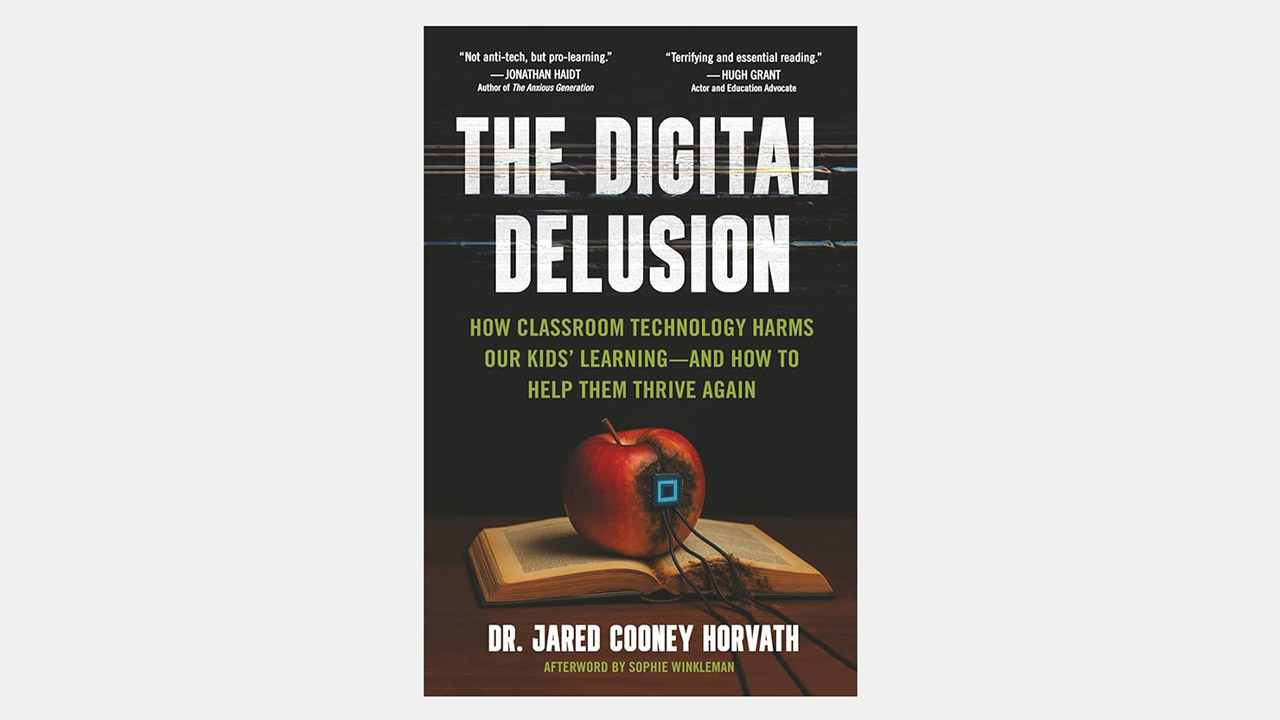
Horvath, J.C. (2025). The Digital Delusion: How Classroom Technology Harms Our Kids’ Learning. Chapter on transfer of learning. Penguin Random House.
Publication Type
Book chapter examining transfer of learning from digital to real-world contexts
What They Studied
Horvath examined research on “transfer” – the ability to apply skills and knowledge learned in one context to different, real-world situations. He investigated whether skills learned through digital interfaces transfer effectively to non-digital contexts and whether there are fundamental differences between skills developed through embodied, physical practice versus digital simulation.
Key Findings:
- “Skills developed offline are typically more robust, varied and embodied”
- Learning in rich, multisensory physical environments creates deeper, more flexible knowledge
- “Students who learn online often become stuck; unable to export their learning into the real world”
- Digital learning can create knowledge that only “works” in digital contexts
- “Transfer becomes critical when we’re dealing with the kind of knowledge and skills meant to shape how we think, act and engage with the world”
- For foundational skills like reading, writing, mathematical reasoning, and critical thinking, transfer is essential
- If students develop these skills primarily through digital interfaces, they may struggle to apply them in real-world situations
- Skills learned through physical manipulation and embodied practice transfer more reliably than skills learned through screen interaction
- The controlled, simplified environment of digital learning may not prepare students for the complexity and variability of real situations
- Laboratory skills learned on simulations don’t necessarily translate to actual laboratory competence
- Mathematical understanding developed through digital exercises may not transfer to real-world problem-solving
- The concern is particularly acute for young children developing foundational skills
- When critical developmental windows are occupied by digital learning, students may miss opportunities to develop transferable, robust skills
Read the book
Horvath, J.C. (2025). The Digital Delusion. Penguin Random House.