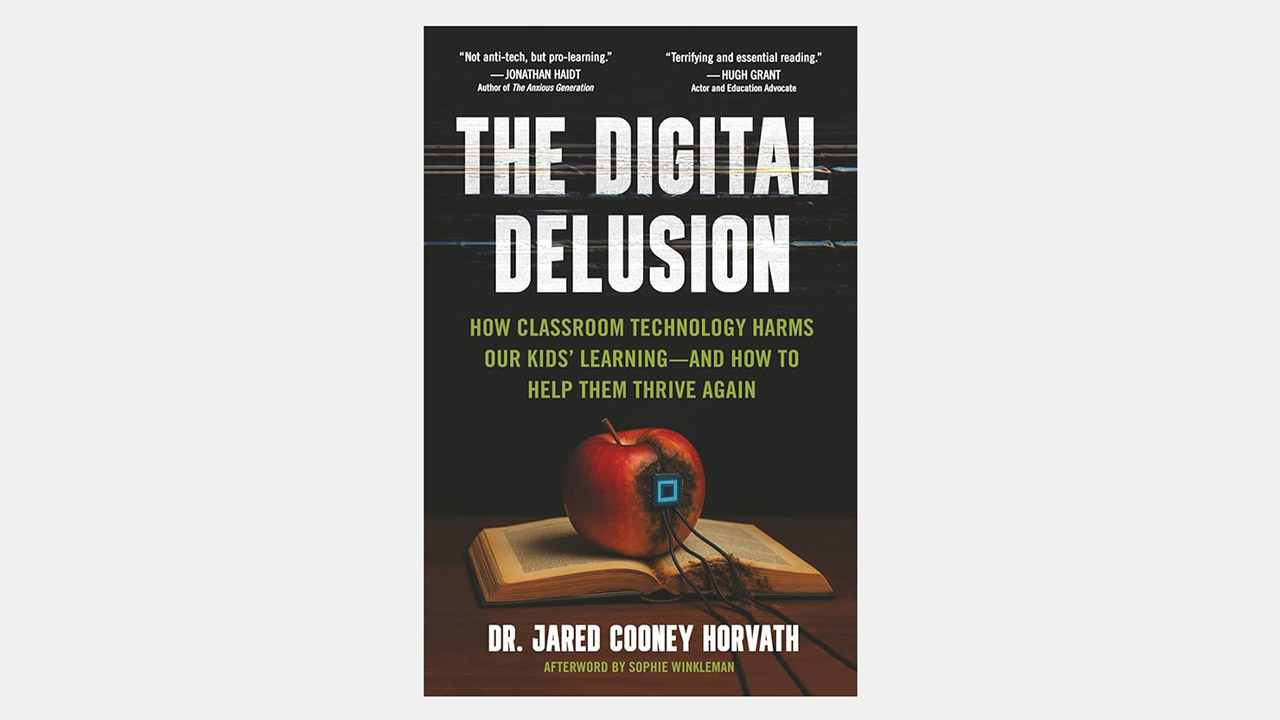
What parents need to know
The more time students spend on screens, the less they learn. As Jonathan Haidt says: “EdTech does not belong in schools until it is thoroughly tested and proven to help.”
Full Citation
Horvath, J.C. (2025). We Gave Students Laptops and Took Away Their Brains. Article published with data visualization showing “Standardized Test Scores Fall With Screen Time.”
Publication Type
Research synthesis article by neuroscientist, with data visualization of multiple international assessments
What They Studied
Jared Cooney Horvath synthesized data from multiple international testing programs (PISA, TIMSS, PIRLS) to create a comprehensive visualization showing the relationship between screen time in schools and academic performance across countries and over time. The article presents the accumulated evidence on how increased device use correlates with declining test scores.
Key Findings
- The more time students spend on screens, the less they learn – the pattern is consistent across international assessments
- The data visualization clearly shows the inverse relationship between screen time and academic achievement
- Jonathan Haidt tweeted about this article: “The more time students spend on screens, the less they learn. EdTech does not belong in schools (until it is thoroughly tested and proven to help)”
- The evidence is now overwhelming enough that major researchers are calling for EdTech to be removed from schools until properly validated
- “We gave students laptops and took away their brains” captures how technology has replaced rather than enhanced cognitive development
- The article emphasizes that this isn’t about being anti-technology, but about demanding evidence before conducting uncontrolled experiments on children
- Multiple independent data sources point to the same conclusion: classroom screen time is negatively associated with learning
- The burden of proof should be on EdTech companies to demonstrate benefit, not on parents to prove harm