What parents need to know
When doing homework on screens, average students last less than 6 minutes before accessing social media or messaging. In class with laptops, students spend 24-38 minutes of every hour off-task. Even when paid to focus, 40% can’t resist multitasking. Humans can’t multitask – it slows us down, lowers accuracy, and stops learning.
Full Citation
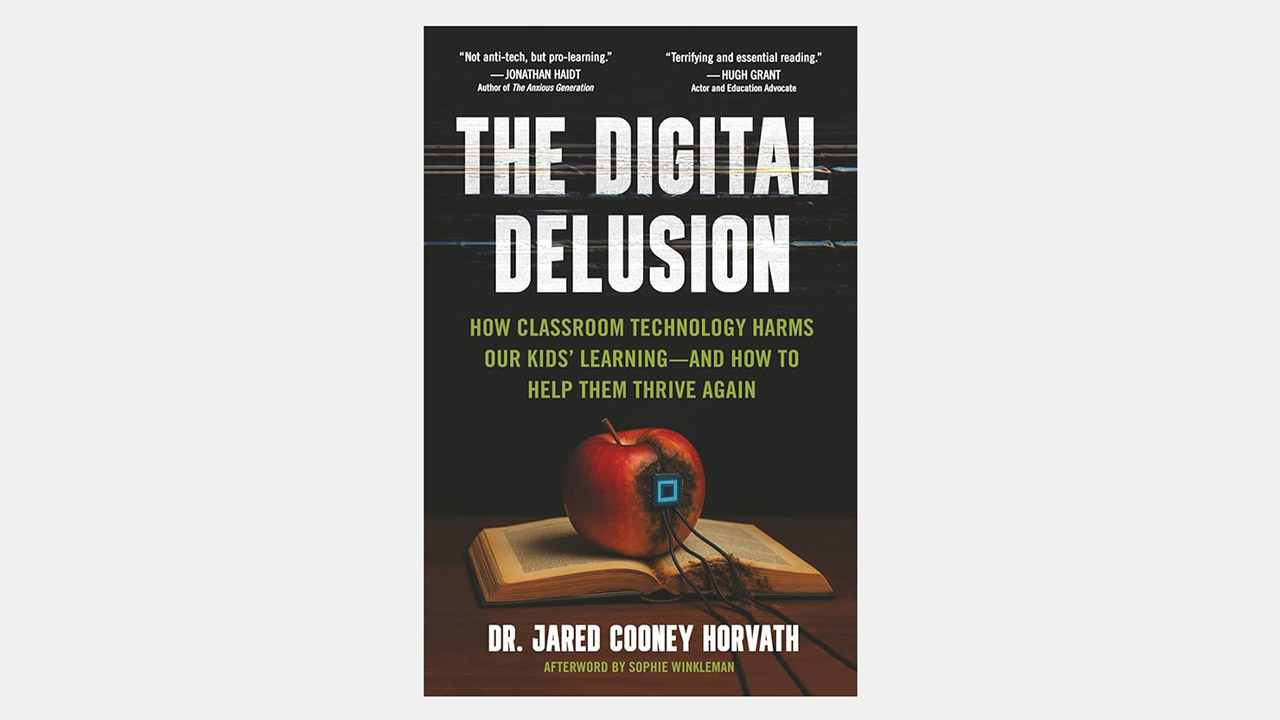
Horvath, J.C. (2025). The Digital Delusion: How Classroom Technology Harms Our Kids’ Learning. Chapter on attention and distraction. Penguin Random House.
Publication Type
Book chapter synthesizing attention research and multitasking studies
What They Studied
Jared Cooney Horvath examined research on attention spans, distraction, and multitasking in digital environments. He analysed studies measuring how long students can maintain focus on academic tasks when screens are available, what they do when they lose focus, and what the cognitive costs of task-switching are for learning.
Key Findings
- “When doing homework on a screen, the average student lasts less than six minutes before accessing social media, messaging friends or engaging with other forms of digital distraction”
- Six minutes is shockingly brief – barely enough time to read a substantial paragraph or work through a single math problem
- “When using a laptop in class, students spend 24-38 minutes of every hour off-task”
- This means students miss more than half of classroom instruction when laptops are present
- “Even in tightly controlled laboratory experiments, where students are paid to stay focused, nearly 40% still can’t resist multi-tasking”
- If financial incentive and artificial laboratory conditions can’t prevent distraction, classroom conditions certainly can’t
- “Humans can’t multi-task. When we force the brain to switch between tasks, it slows us down, lowers our accuracy and stops us learning”
- What feels like multitasking is actually rapid task-switching, and each switch has a cognitive cost
- “Multitasking is one of the worst things we can do for learning”
- The attention collapse isn’t about lack of willpower – it’s about brain architecture and how digital devices exploit attention systems
- Every distraction interrupts the cognitive processing required for learning
- Students may spend hours “studying” on devices while accomplishing little actual learning
Read the book
Horvath, J.C. (2025). The Digital Delusion. Penguin Random House.