What parents need to know
Handwriting is inherently varied – each tool feels different, each surface offers unique resistance. This variability makes handwriting a deep, flexible skill. Typing is uniform – the same button press every time. Children from tech-heavy classrooms who are fluent typists frequently show impaired handwriting and weaker literacy skills.
Full Citation
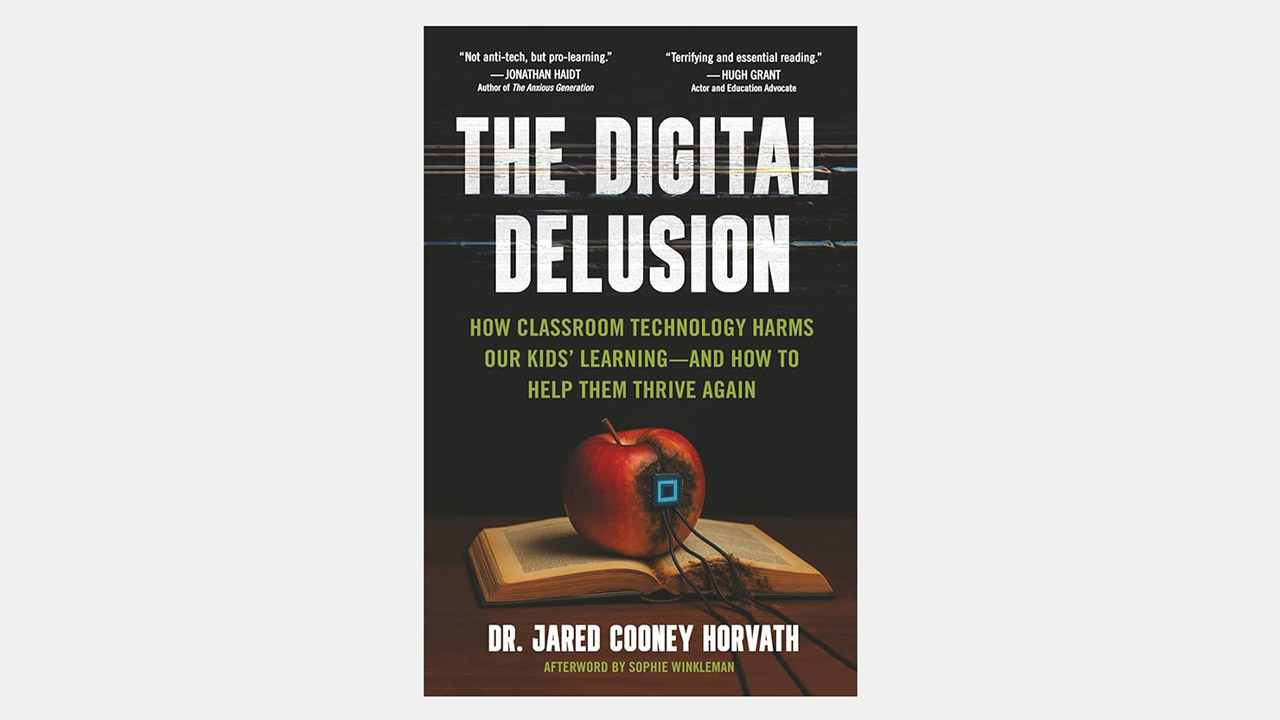
Horvath, J.C. (2025). The Digital Delusion: How Classroom Technology Harms Our Kids’ Learning. Chapter on motor learning and skill development. Penguin Random House.
Publication Type
Book chapter applying motor learning research to handwriting and typing
What They Studied
Horvath examined research from motor learning and skill acquisition to understand why handwriting develops more robust, transferable skills than typing. He investigated how the variability inherent in handwriting (different tools, surfaces, letter forms) creates deeper, more flexible learning compared to the uniformity of typing.
Key Findings
- Motor learning research shows that “the more varied the learning experiences are, the more adaptable the resulting skills will be”
- “Handwriting is inherently varied. Each tool (pencils, crayons, markers) feels different in your hand. Each surface (paper, cardboard, blackboard) offers unique resistance. Each letter (uppercase, lowercase, cursive) demands slightly different motor patterns”
- “This variability makes handwriting a deep and flexible motor skill”
- In contrast, “Typing, on the other hand, is inherently uniform… the basic action of pressing a button never changes”
- The lack of variation in typing means it develops narrow, inflexible skills
- “In fact, children from tech-heavy classrooms who are fluent typists frequently show impaired handwriting and weaker literacy skills than peers in more analog environments”
- This finding is particularly concerning: tech-heavy education doesn’t just fail to develop handwriting – it appears to actively impair it
- The variability of handwriting builds motor control that transfers to other skills; typing’s uniformity does not
- When children learn to type before developing handwriting fluency, they may miss critical developmental windows
- Schools that emphasize typing skills for young children at the expense of handwriting may be undermining broader cognitive and literacy development
Read the book
Horvath, J.C. (2025). The Digital Delusion. Penguin Random House.