What parents need to know
Investing in air conditioning has more positive impact on student learning than giving every student a laptop. Schools are spending millions on technology when simpler, cheaper solutions would help children learn more.
Full Citation
Horvath, J.C. (2024). The EdTech Revolution Has Failed. After Babel, Substack publication.
Publication Type
Research synthesis article by neuroscientist and education researcher, published in collaboration with Jonathan Haidt’s After Babel project
What They Studied
Neuroscientist Jared Cooney Horvath synthesized decades of research on educational technology, comparing the effect sizes (a statistical measure of impact) of various educational interventions. He examined whether the massive investment in classroom technology has produced returns comparable to other, often simpler and cheaper, school improvements.
Key Findings
- “Investing in air conditioning has a more beneficial impact on student learning than investing in a laptop for every student (ES = 0.21 vs 0.16)”
- Effect size analysis shows that environmental improvements like air conditioning (0.21) have greater positive impact on learning than one-to-one device programs (0.16)
- Many low-tech or no-tech interventions consistently outperform expensive technology initiatives
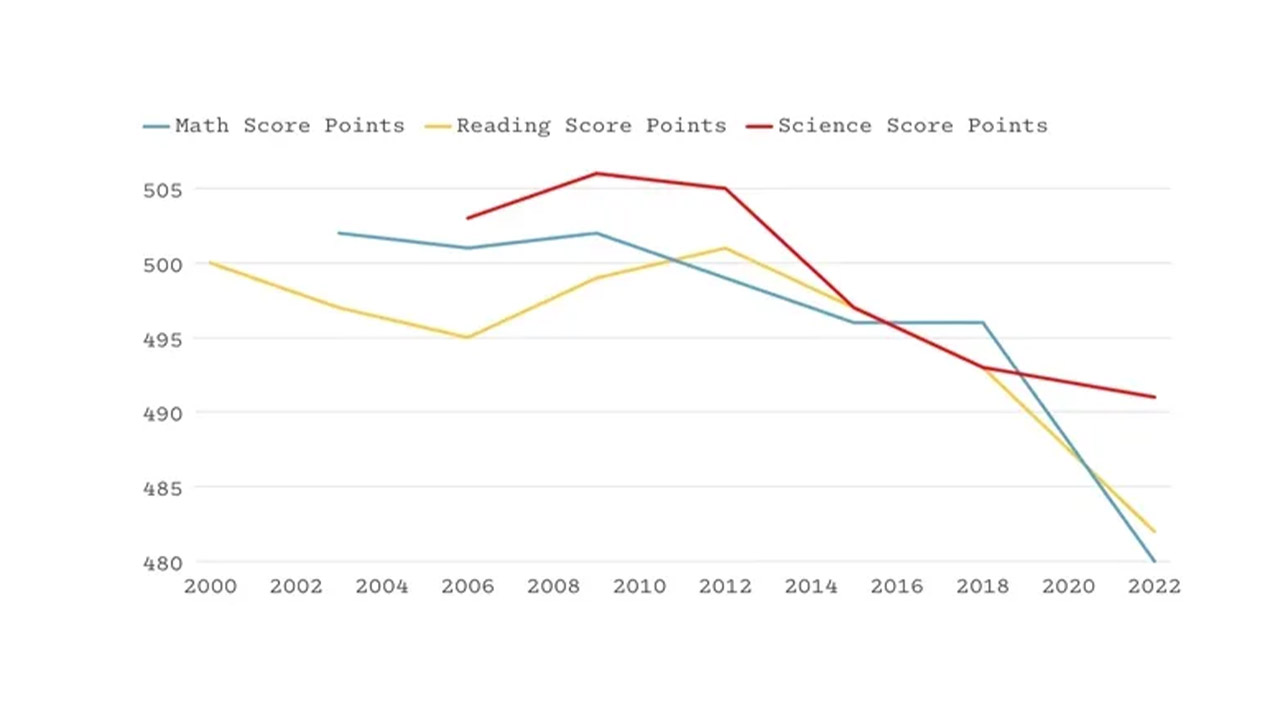
- The EdTech “revolution” has failed to deliver on its promises despite decades of implementation and billions in spending
- Schools are making poor investment decisions by prioritizing technology over proven interventions like improved learning environments, better teacher training, or smaller class sizes
- The evidence suggests that much of the money currently spent on classroom technology would generate better learning outcomes if redirected to simpler solutions
- This represents a massive misallocation of limited educational resources, driven by marketing rather than evidence