The Six Interconnected Harms of EdTech

The evidence now shows that screen-based education undermines learning outcomes, damages physical and mental health, exposes children to surveillance and safeguarding failures, and erodes the quality of teaching.

The Issues

Filter by Topic:

The promise was simple: digital tools would revolutionise learning, making it more engaging, efficient, and effective. The reality is the opposite.

Decades of research now show that screen-based learning actively undermines the deep thinking, sustained attention, and critical analysis that education is meant to develop. Reading on screens reduces comprehension by 6-8 times compared to paper.1 Digital environments encourage shallow processing – skimming and scanning – whereas paper promotes the deep reading essential for understanding complex ideas.2

Humans evolved to learn from other humans. Our brains depend on subtle social cues – mirroring, mimicry, synchrony – to drive deep understanding. Screens remove the mechanisms that our biology relies on to process and retain information.3 No amount of software engineering can override 150,000 years of human evolution.

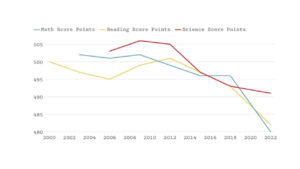
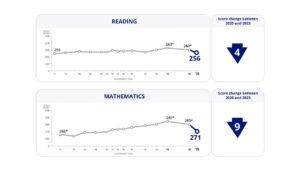
The evidence is clear: expanding digital technology at the expense of traditional instruction harms achievement.4 Countries which invest less in classroom computers improve faster than those that invest more.5 When we replace books with screens, we’re not modernising education – we’re undermining it.

Key Evidence

  • 6-8 times: How much better paper reading is for comprehension compared to digital1
  • 6 months: Learning advantage of paper-based tests over screen tests6
  • 54 studies: Meta-analysis confirming paper reading superiority across contexts7
  • 20+ years: How long research has consistently shown this – yet schools keep digitalising8

Sources:

  1. Valencia University (2023): Digital reading 6-8× less effective than paper
  2. University of Oslo (2024): Screen reading encourages shallow processing
  3. Sophie Winkleman & Dr Jared Cooney Horvath, Parliamentary testimony (November 2024)
  4. Meta-analysis of 100+ moderators of learning, cited in Parliamentary testimony (November 2024)
  5. OECD findings, cited in Parliamentary testimony (November 2024)
  6. UCL (2018): Analysis of PISA 2015 data
  7. Valencia University Meta-Analysis (2018): 54 studies
  8. University of Maryland (2017): Review of decades of research

Research

Schools have a duty of care to protect children's physical wellbeing. Yet by mandating hours of daily screen time, they're exposing developing bodies to documented health risks.

The Spanish Paediatrics Society is unequivocal: children aged 7-12 should have a maximum of 1 hour of total daily screen time – including all school use.1 Most schools far exceed this in a single day, before adding homework and home use. As screen time in schools increased by 11+ hours weekly, children’s physical activity dropped and sleep patterns deteriorated.2

The health impacts extend beyond screens themselves. When children spend their school day hunched over devices, they’re not moving, playing, or developing the physical coordination and strength that childhood is meant to build. The shift from active, embodied learning to sedentary screen time represents a fundamental change in how children experience education – with consequences for their physical development.

These aren’t theoretical concerns. Medical professionals across Europe are raising alarms about rising health issues in children that correlate directly with increased screen exposure in schools.3

Key Evidence

  • 1 hour maximum: Spanish Paediatrics Society recommendation for daily screen time ages 7-12 (including school)1
  • 11+ hours/week: Increase in children’s screen exposure in just 3.5 years2
  • 18 minutes/day: Drop in physical activity as screens increased2
  • Doubled: Rate of psychological distress in children over same period2

Sources:

  1. Spanish Paediatrics Society (AEP), December 2024 recommendations
  2. Gasol Foundation data, cited by Diego Hidalgo, Parliamentary testimony (November 2024)
  3. Diego Hidalgo, OFF Movement; Dr Rangan Chatterjee, Parliamentary testimony (November 2024)

Research

We are witnessing an unprecedented crisis in young people's mental health. Rates of anxiety, depression, and attention problems have soared precisely as schools have mandated constant device use and digital stimulation.

The correlation is stark: in Spain, as children’s screen time increased by 11+ hours weekly, those experiencing psychological distress doubled.1 This isn’t coincidental. Constant digital stimulation affects how developing brains regulate attention, manage emotions, and build resilience. School-mandated device use means children cannot escape – the anxiety-inducing environment follows them from classroom to bedroom.

The problem extends beyond social media. Even “educational” screen time contributes to the attention fragmentation, stress responses, and emotional dysregulation that characterise the youth mental health crisis. When schools require children to spend their days in digitally-mediated environments designed to capture and hold attention, they’re not just affecting learning – they’re affecting mental wellbeing.

Leading researchers on youth mental health identify school-mandated screen time as a significant contributing factor to the adolescent anxiety and depression epidemic.2 Schools have inadvertently become part of the problem.

Key Evidence

  • Doubled: Rate of children experiencing psychological distress as screen time increased1
  • 11+ hours/week: Increase in screen exposure in 3.5 years – mainly from EdTech1
  • Zero escape: School-mandated devices mean constant exposure, even at home
  • Developmental impact: Critical years of emotional development spent in attention-fragmenting digital environments3

Sources:

  1. Gasol Foundation data, cited by Diego Hidalgo, Parliamentary testimony (November 2024)
  2. Jonathan Haidt, research on youth mental health crisis and role of excessive screen time
  3. Emily Cherkin, Parliamentary testimony (November 2024)

Research

When you send your child to school, you expect them to be taught - not surveilled, profiled, and their data sold to advertisers. Yet that's exactly what's happening through some EdTech platforms.

A Human Rights Watch investigation found that 89% of EdTech platforms can monitor children, with many sharing data with advertising companies.1 These aren’t just tracking what children learn – they’re recording behaviour, conversations, how they write, how they hold their pencil, their struggles and fears.2 This information builds commercial profiles used to predict and influence children’s behaviour, then sold to third parties.

This represents surveillance capitalism entering the classroom. Children’s data – their intellectual development, their mistakes, their private thoughts expressed in school work – becomes raw material for a data economy that treats children as products rather than people.2 Parents are rarely given meaningful information or genuine consent options. Schools often don’t understand what data is collected or where it goes.

The digital classroom is no longer a public space governed in children’s interests. It runs on private infrastructure, harvesting data for commercial benefit, with no meaningful oversight or accountability.3 Our children deserve better.

Key Evidence

  • 89%: EdTech platforms that can monitor children1
  • Everything tracked: Behaviour, grades, conversations, how children hold their pencil – all recorded2
  • No meaningful consent: Parents rarely informed; data shared with third parties without permission2
  • Commercial profiles: Children’s data used to predict and influence behaviour for profit2

Sources:

  1. Human Rights Watch (2022): Investigation of EdTech in 49 countries
  2. Julie and Andrew Liddell, EdTech Law Center, Parliamentary testimony (November 2024)
  3. Dr Velislava Hillman, Parliamentary testimony (November 2024)

Research

Every school filter supplier includes the same disclaimer: "No filter is 100% effective."1 They say this to avoid being sued. But when a child finds a loophole, the entire dark domain of the internet opens up to welcome them.

The mathematics are simple and horrifying. In a council with 37,000 children and a 99% effective filter, 370 children are statistically guaranteed to access disturbing content every single day.1 But filters aren’t 99% effective – they fail far more often. In Edinburgh, Glasgow, and the Scottish Borders, over 100,000 children were left exposed to unlimited pornography and violent content for potentially years due to configuration errors.1

Real children are being harmed. Six-year-olds served hardcore pornography for weeks. Seven-year-olds assigned naked adult “tutors.” Ten-year-olds groomed by predators. Eleven-year-olds developing pornography addictions.2 These aren’t isolated incidents – they’re inevitable outcomes of giving young children internet-connected devices that cannot be adequately protected.

Even leading, government-accredited filter companies cannot make these devices safe. If a company like CGI – which runs the Police National Database and the Child Abuse Image Database – cannot protect school devices, no one can.1 The filters don’t work. They have never worked. And children are paying the price.

Key Evidence

  • “No filter is 100% effective”: Standard disclaimer from all school filter suppliers1
  • 100,000+ children: Exposed to extreme content in Scotland due to filter failures1
  • Government-recommended testing: Gives false positives – shows filters working whilst children access pornography1
  • Case studies: 6-year-olds, 7-year-olds, 10-year-olds harmed on school devices despite “protection”2

Sources:

  1. Harry Amies, software engineer and parent, Parliamentary testimony (November 2024)
  2. Julie Liddell, EdTech Law Center case studies, Parliamentary testimony (November 2024)

Research

The central promise of EdTech - that digital tools improve learning - is demonstrably false. Yet this false promise continues to justify billions in spending and the transformation of education itself.

UNESCO’s 2023 Global Education Monitoring Report found very little robust evidence that technology improves learning.1 The OECD is even more damning: students who use computers very frequently at school do worse in most learning outcomes, and countries that invest less in classroom technology improve faster than those that invest more.2 Sweden’s Karolinska Institute concluded there is “clear scientific support that digital tools risk impairing, rather than improving, student learning” – leading to a €104 million reversal to restore textbooks.3

But EdTech doesn’t just fail to improve learning – it actively undermines teaching. Teachers are reduced from intellectual guides to “digital monitors,” spending their time policing screen use rather than teaching.4 Quality materials are replaced with low-quality digital content. The human relationship at the heart of education – where children learn from trusted adults through subtle social cues that screens cannot replicate – is subordinated to software that serves commercial, not educational, interests.5

Human beings evolved to learn from other human beings. Our brains depend on mirroring, mimicry, and synchrony to drive deep understanding.5 EdTech’s promise of “personalised learning” and “efficiency” fundamentally misunderstands how learning actually works. Education requires time, struggle, and human connection – everything EdTech is designed to eliminate.4

Key Evidence

  • Very little evidence: UNESCO finding on EdTech effectiveness1
  • Worse outcomes: OECD finding that frequent computer use leads to worse learning
  • €104 million reversal: Sweden’s investment to restore textbooks after expert review3
  • 150,000 years: Human evolutionary history of learning from other humans that screens cannot override5

Sources:

  1. UNESCO Global Education Monitoring Report (2023)
  2. OECD findings, cited in Parliamentary testimony (November 2024)
  3. Karolinska Institute Sweden (2023), leading to Sweden’s policy reversal
  4. Emily Cherkin, Parliamentary testimony (November 2024)
  5. Sophie Winkleman & Dr Jared Cooney Horvath joint statement, Parliamentary testimony (November 2024)

Research

What Parents Can Do

Understanding the issues is the first step. Now arm yourself with evidence and learn how to advocate for change.